When Eliud Kipchoge crossed the finish line under two hours in Vienna—a feat once deemed physiologically impossible—the world watched in awe. But beneath the headlines and human drama was a detail whispered by insiders: the shoes on his feet weighed less than a bar of soap. This wasn’t just poetic imagery. It represented a paradigm shift in athletic performance, where every gram saved translates into seconds shaved. The shoes lighter than a bar of soap aren’t sci-fi prototypes—they’re real, race-legal, and already rewriting the record books.
The Physics of Speed: Why Weight Matters in Marathon Shoes
Runners don’t just fight fatigue—they battle physics. With each stride, the foot lifts and lands over 26,000 times in a marathon. That’s 26,000 repetitions of accelerating and decelerating a shoe’s mass. While a difference of 50 grams per shoe may seem trivial, in biomechanics, it’s monumental.
Studies show that for every 100 grams added per shoe, running economy decreases by approximately 1%. That means a runner wearing 400-gram shoes could be burning up to 3% more energy than someone in 200-gram footwear. Over 42.195 kilometers, that gap can mean the difference between a personal best and a missed qualification.
Enter the new generation of marathon racers: shoes tipping the scales at under 200 grams—lighter than a standard bar of soap (typically 230–250 grams). These aren’t minimalist zero-drop trainers from the barefoot running era. They’re high-tech powerhouses combining featherweight materials with energy return systems that actively propel runners forward.
The Breakthrough: Carbon Fiber Plates and Foam Science
The secret behind these soap-bar-light shoes lies in two innovations: ultra-resilient midsole foams and full-length carbon fiber plates.
PEBA-based foams like Nike’s ZoomX, Adidas’ Lightstrike Pro, and Puma’s Nitro Elite offer an energy return of up to 85%—meaning nearly all the energy absorbed on footstrike is returned on toe-off. Compare that to traditional EVA foam, which returns just 50–60%, and the advantage becomes clear.
Paired with this is the carbon fiber plate, a stiff, curved spine embedded in the midsole. It doesn’t just stabilize—it acts like a spring-loaded lever, reducing calf muscle load and increasing propulsion efficiency. Together, these technologies create a “pop” with every step, turning strides into near-effortless glides.
Take the Nike ZoomX Vaporfly Next% 3—a favorite among elites. Each shoe weighs just 184 grams (men’s size 9). That’s 50 grams lighter than the average racing flat from a decade ago, despite being packed with more technology. The shoe helped Kipchoge achieve a 2:01:09 in Berlin and contributed to multiple sub-2:03 performances in recent years.
How Light Is Light? Comparing Weight to Everyday Objects
To grasp just how light these shoes are, consider this:
| Object | Weight (grams) |
|---|---|
| Standard bar of soap | 230–250 |
| iPhone 14 | 172 |
| Nike ZoomX Vaporfly Next% 3 | 184 |
| Adidas Adizero Adios Pro 3 | 195 |
| Saucony Endorphin Pro 3 | 205 |
| Average running shoe (2010s) | 280–320 |
Yes—the latest racing shoes are lighter than your phone and a real bar of soap. And unlike phones, they’re built to survive 26.2 miles of relentless pounding.
But weight isn’t the only factor. These shoes achieve their low mass without sacrificing stack height or protection. In fact, they’re taller and more cushioned than ever. The trick? Replacing dense materials with advanced foams and precision-engineered plates that do more with less.
Real-World Impact: Record After Record Shattered

Since the debut of the first Vaporfly in 2017, marathon world records have tumbled. Let’s look at the evidence:
- 2018 Berlin Marathon: Eliud Kipchoge runs 2:01:39 in the Vaporfly 4%. The shoe averages 210 grams—still lighter than soap.
- 2022 Berlin Marathon: Kipchoge runs 2:01:09 in the Next% 2. Shoes now at 198 grams.
- 2023 Chicago Marathon: Kelvin Kiptum smashes the world record with 2:00:35—wearing the Next% 3, at 184 grams.
At the elite level, these shoes have become standard. In the 2022 Berlin Marathon, 85% of professional men wore some version of a carbon-plated racer. Among women, it was 73%. At Boston? Nearly all podium contenders wore one of five models—all under 200 grams.
It’s not just the pros. Recreational runners using these shoes report noticeable improvements in half-marathon and marathon times—typically 2–4%. For a 3:30 marathoner, that’s a 4.5 to 9-minute gain, solely from footwear.
The Limits of Lightweight: Durability and Accessibility
Despite their advantages, shoes lighter than a bar of soap aren’t without trade-offs.
Durability is the biggest concern. The foams that make these shoes so light are also less resistant to compression over time. Most elite racers retire their shoes after 100–150 miles. For daily training, that’s not practical.
Cost is another barrier. These shoes retail between $225 and $275. That’s a steep price for amateurs, especially when they wear out fast. Consider this: a runner logging 40 miles a week would replace a pair every 3–4 months—costing over $1,000 a year.
There’s also a skill threshold. The aggressive rocker shape and stiff plate require strong calves and good running form. New runners or those with Achilles issues often report discomfort or injury when transitioning too quickly.
And while World Athletics has approved these shoes—capping midsole thickness at 40mm and limiting plate count to one—debate continues about whether they constitute “mechanical doping.” Still, for now, they remain legal, and innovation presses forward.
Behind the Scenes: How
These Shoes Are Built
The manufacturing process behind these shoes is as revolutionary as their performance.
- Foam Expansion: PEBA pellets are superheated and expanded into a mold using nitrogen gas, creating a lightweight, honeycomb-like structure.
- Plate Insertion: A pre-curved carbon fiber plate is placed into the midsole mold before foaming, ensuring seamless integration.
- 3D Knit Uppers: The upper is woven from single-thread yarns, minimizing seams and reducing weight to under 30 grams.
- Rocker Geometry: The sole is shaped with a precise curve, optimized via gait lab data to reduce foot strike time.
Nike, for example, uses a proprietary process called “ZoomX foam infusion,” where the foam is expanded up to seven times its original volume. This results in a midsole that’s both soft and explosive—critical for maintaining speed over long distances.
Adidas and Puma have followed suit with similar processes, using 3D printing and robotic knitting to achieve comparable weights and performance.
The Future: What’s Next for Racing Footwear?
The race to build even lighter, more efficient shoes is far from over.
Emerging trends include:
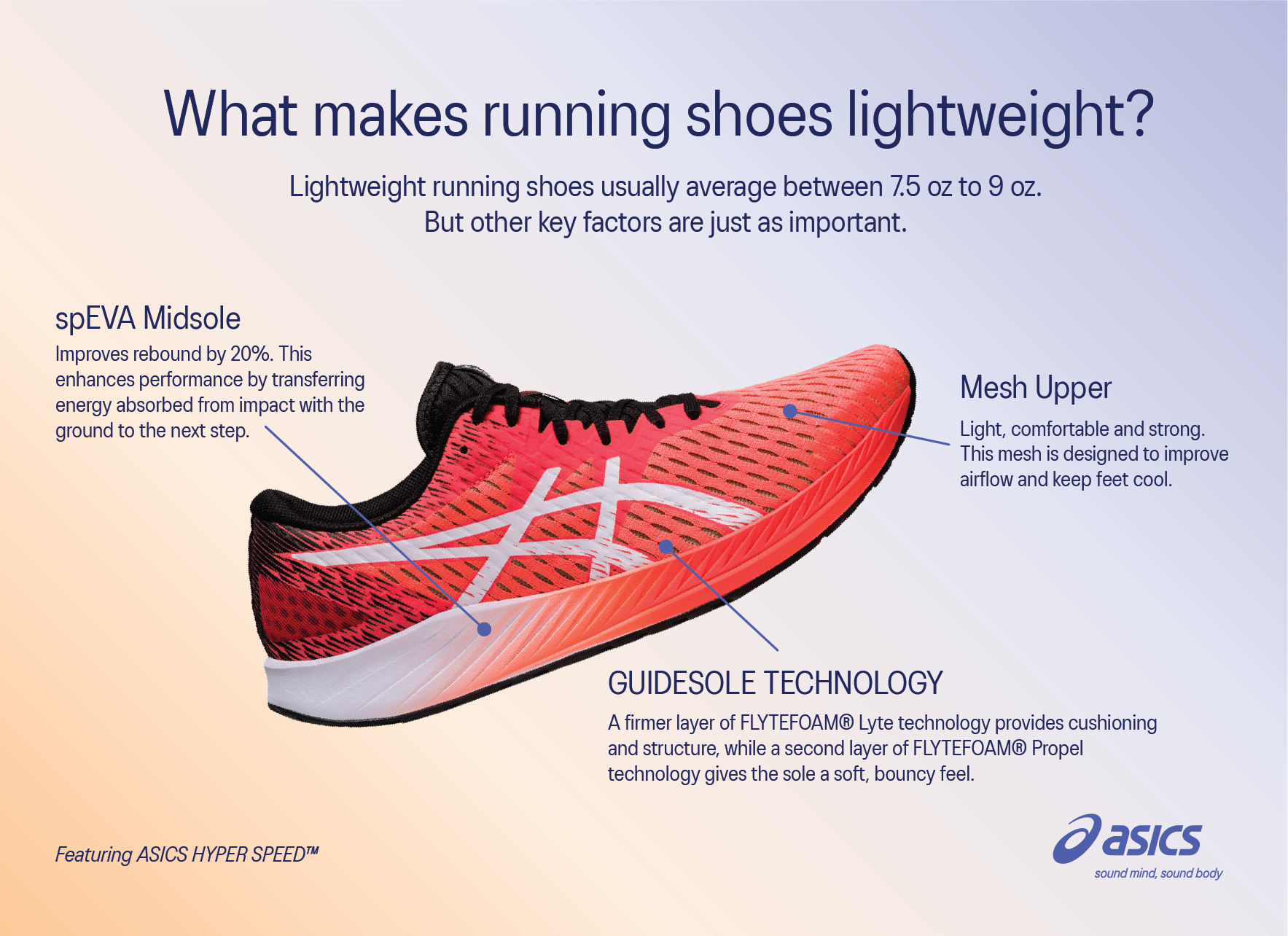
- Bio-based foams: Companies like On are experimenting with castor bean oil-derived foams to cut weight and environmental impact.
- AI-driven design: Algorithms are now simulating thousands of midsole geometries to find the optimal balance of cushioning, weight, and energy return.
- Custom 3D-printed plates: Startups are developing plates tailored to individual runners’ biomechanics—lighter where possible, stiffer where needed.
- Recycled uppers: Some brands now use uppers made from recycled ocean plastic, reducing weight by 5–10% without sacrificing strength.
One thing is clear: the era of heavy, passive running shoes is over. The future belongs to footwear that does more than protect—it enhances.
Choosing the Right Shoe: What Runners Need to Know
If you’re considering stepping into a pair of these record-breaking racers, here’s how to do it right:
- Start with a transition plan: Wear them for short runs first. Increase distance gradually over 4–6 weeks.
- Reserve for race day and key workouts: These shoes are best saved for tempo runs, intervals, and races—not long daily training.
- Pair with strong legs: Strengthen your calves, Achilles, and glutes to handle the increased demand.
- Know your form: If you’re a heel striker or have a slow cadence, work on technique before adopting a highly rockered shoe.
- Replace them early: Don’t stretch mileage. Once you hit 150 miles, performance drops sharply.
A few top models to consider:
- Nike ZoomX Vaporfly Next% 3 – 184g, best for marathoners seeking maximum energy return.
- Adidas Adizero Adios Pro 3 – 195g, features EnergyRods for lateral stability.
- Puma Deviate Nitro 2 Elite – 198g, aggressive rocker, ideal for fast turnover runners.
- Saucony Endorphin Pro 4 – 205g, slightly heavier but more durable.
- New Balance FuelCell RC Elite v3 – 203g, excellent value with strong pop.
All are lighter than a bar of soap. All have powered sub-2:10 marathons. But none replace training, consistency, or smart pacing.
Final Step: From Innovation to Execution
The shoes lighter than a bar of soap didn’t break records on their own. They amplified the brilliance of athletes like Kipchoge and Kiptum—runners who trained relentlessly, recovered meticulously, and raced with unmatched focus. The footwear was the final gear in a complex machine.
For the rest of us, the lesson isn’t just about buying the lightest shoe. It’s about understanding that small advantages compound. Whether it’s shedding shoe weight, improving running economy, or optimizing recovery, progress lives in the margins.
If you’re aiming for a breakthrough, start with your shoes—but don’t stop there. Pair innovation with discipline. Let technology elevate your effort, not replace it.
Update your gear. Refine your form. Trust the process. The next record—yours—is waiting.
FAQ
Are shoes lighter than a bar of soap allowed in competition? Yes. As long as they comply with World Athletics rules (e.g., single carbon plate, midsole under 40mm), they’re legal for elite and amateur races.
Can beginners use these lightweight racing shoes? They can, but it’s not recommended without proper preparation. Beginners should build strength and form first to avoid injury.
Why are these shoes so expensive? High costs come from advanced materials (like PEBA foam), R&D, and low production volumes. They’re built for performance, not mass durability.
Do lightweight racing shoes really improve times? Yes. Studies and race data show an average improvement of 2–4% in marathon times when switching to carbon-plated, lightweight racers.
How long do these shoes last? Most last 100–150 miles. Performance declines as the foam compresses, so they’re best reserved for races and key workouts.
Can I train in these shoes every day? Not efficiently. They’re designed for speed, not daily pounding. Use durable trainers for most runs and save racers for race day.
Will future shoes get even lighter? Likely. With advances in materials science and 3D printing, sub-150g marathon shoes may emerge within the decade—without sacrificing performance.
FAQ
What should you look for in Lighter Than a Bar of Soap: The Shoes That Broke the Marathon Record? Focus on relevance, practical value, and how well the solution matches real user intent.
Is Lighter Than a Bar of Soap: The Shoes That Broke the Marathon Record suitable for beginners? That depends on the workflow, but a clear step-by-step approach usually makes it easier to start.
How do you compare options around Lighter Than a Bar of Soap: The Shoes That Broke the Marathon Record? Compare features, trust signals, limitations, pricing, and ease of implementation.
What mistakes should you avoid? Avoid generic choices, weak validation, and decisions based only on marketing claims.
What is the next best step? Shortlist the most relevant options, validate them quickly, and refine from real-world results.